

Nankai University International Student Receives Reply Letter from President Xi Jinping
Recently, President Xi Jinping sent signed reply letters to 61 young sinologists from 51 countries, encouraging them to continue their sinology research, introduce a real, multidimensional, and comprehensive China to the world, and serve as envoys connecting Chinese and foreign civilizations. Batbaatar Tserenpuntsag, a Mongolian doctoral student at Nankai University, was among the representatives who wrote to the President and was honored to receive this meaningful reply.
Tserenpuntsag excitedly remarked, “This reply from President Xi is not only an acknowledgment of my personal academic journey, but also a heartfelt expectation for the global community of young sinologists. The phrase ‘Sinology originates from China and belongs to the world’ deeply moved me. Over the past 16 years, from my hometown in Mongolia to Tianjin, China, learning Chinese has not only reshaped my life, but also allowed me to serve as a small bridge for cultural exchanges between China and Mongolia.”
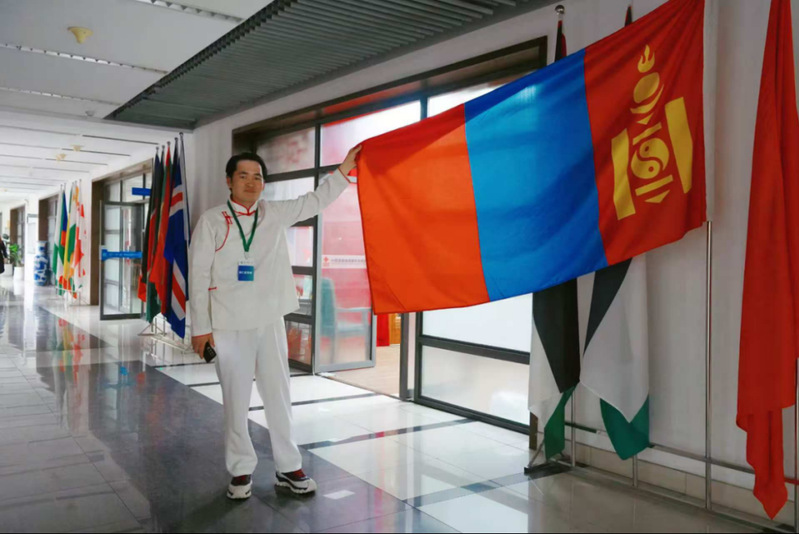
Tserenpuntsag at the “New Sinology Program” study camp in May 2025
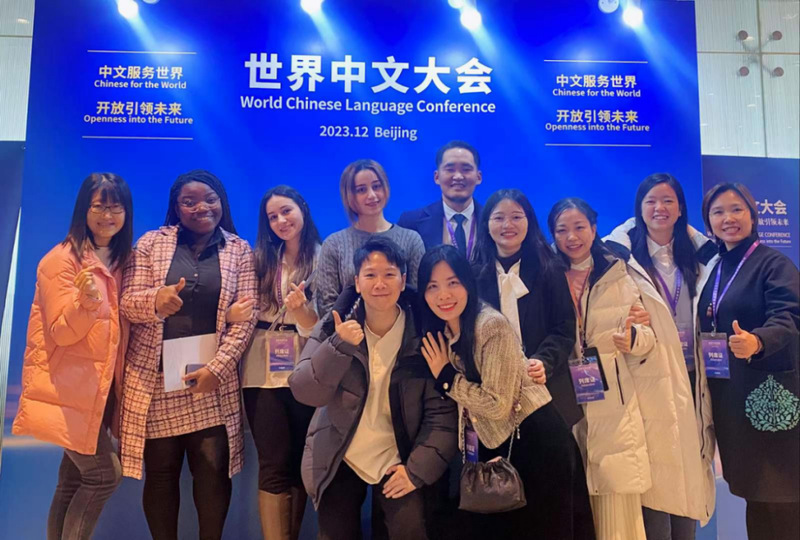
Tserenpuntsag (central, back row) at the First World Chinese Language Conference in December 2023
In 2009, while still in high school in Ulaanbaatar, Tserenpuntsag first encountered the Chinese language. After completing his undergraduate studies in 2013, he was awarded the International Chinese Language Teachers Scholarship and came to Nankai University to pursue a master’s degree. During his studies, he excelled in the first “Confucius Institute Cup” Chinese Language Teaching Skills Competition and conducted in-depth comparative research on Mongolian and Chinese languages, laying a solid foundation for systematic engagement in sinology.
Guided by the belief that “Language is a bridge for mutual learning among civilizations and a bond connecting people’s hearts”, Tserenpuntsag returned to Ulaanbaatar in 2018 to establish a Chinese language training center. By extending teaching to the forefront of economic and trade cooperation, he promoted practical cooperation between China and Mongolia while fostering cultural exchange. In 2021, he was once again funded by the Ministry of Education’s “New Sinology Program” and returned to Nankai University for doctoral studies. He has since showcased a broad international perspective and solid academic skills at the World Young Sinologists Forum.
At Nankai University, many young scholars like Tserenpuntsag are part of the Ministry of Education’s “New Sinology Program”, serving as important forces in people-to-people exchanges between China and the world.
Since 2013, as a key implementing institution of the program, Nankai University has cultivated 33 outstanding young sinology scholars from 16 countries. Their research spans eight major humanities and social sciences disciplines, including history, law, literature, philosophy, and sociology.
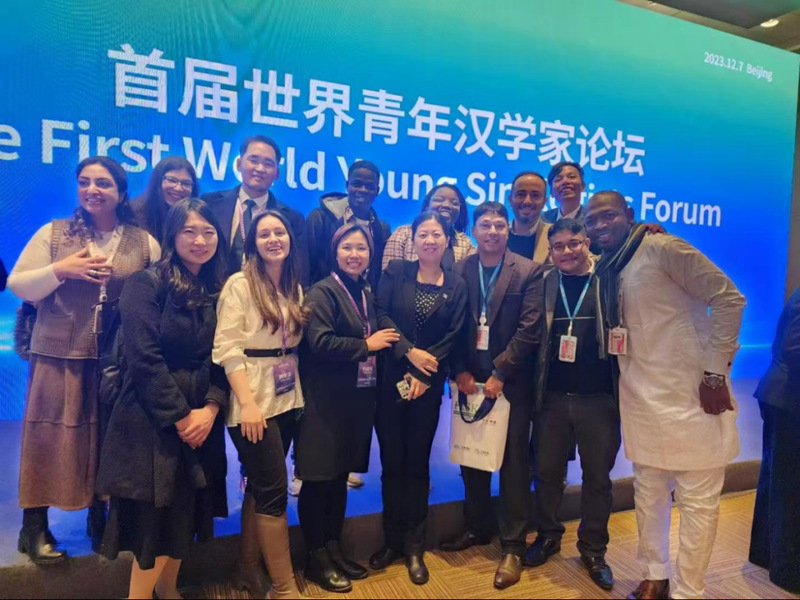
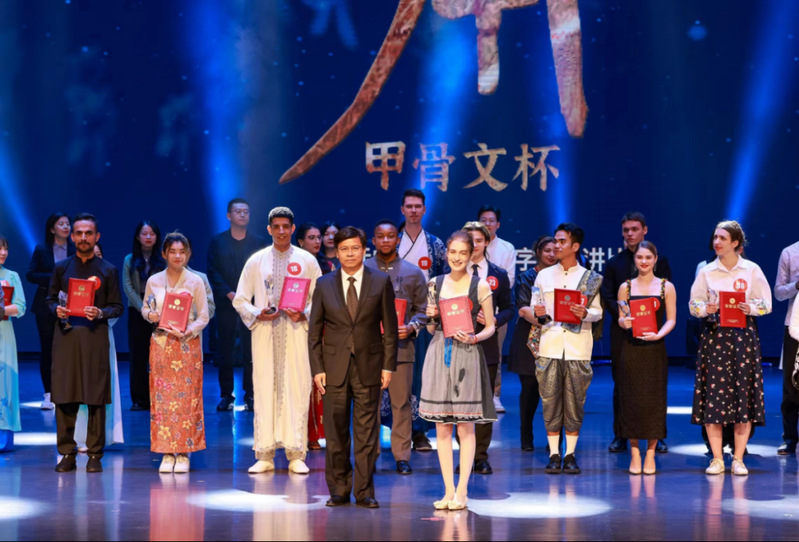
Representatives of international students from Nankai University attending the First World Young Sinologists Forum in 2025
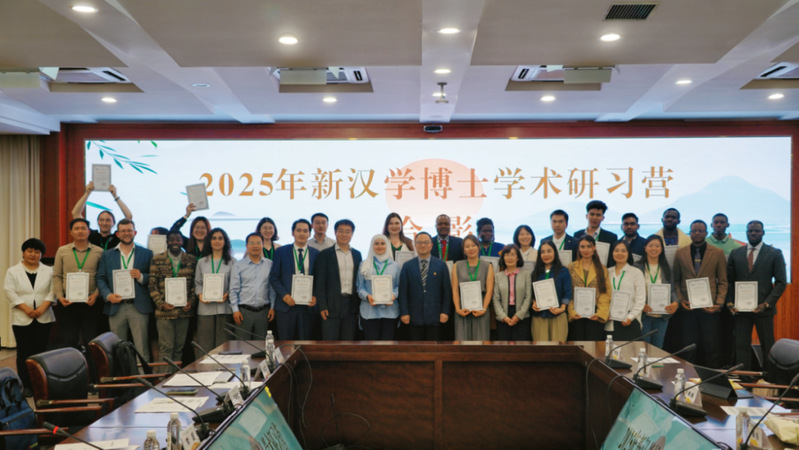
New Sinology Doctoral Academic Research Camp in Zhejiang in 2025
At Nankai University, the New Sinology Program is implemented under the principles of high-standard selection and high-level cultivation, drawing on the university’s deep humanities tradition. Over the past decade, nearly 30 doctoral supervisors, including several national-level leading scholars, have taken part in the program. The university not only provides international students with rigorous academic training, but also tailors a range of activities such as academic forums, thematic seminars and cross-cultural workshops. Students are encouraged to participate in international conferences, engage in collaborative research, and develop in-depth academic exchanges with scholars from China and abroad.
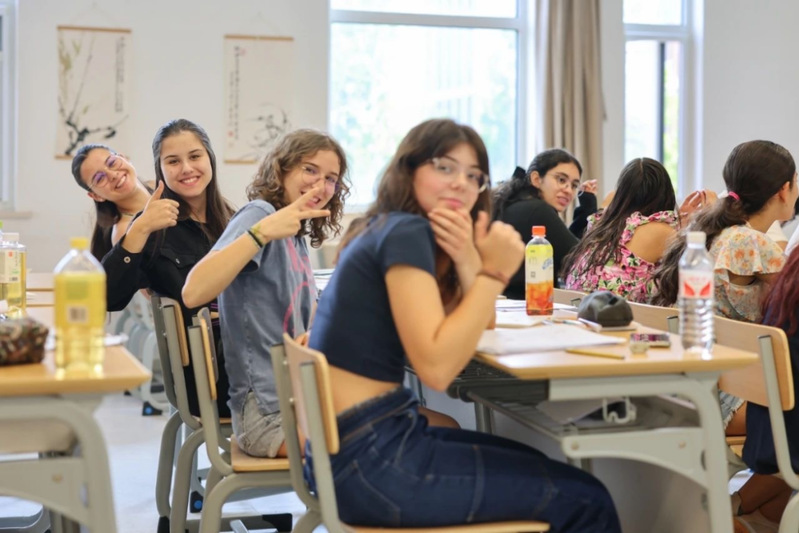
“Chinese Bridge” Multinational Youth Summer Camp at Nankai University in 2025
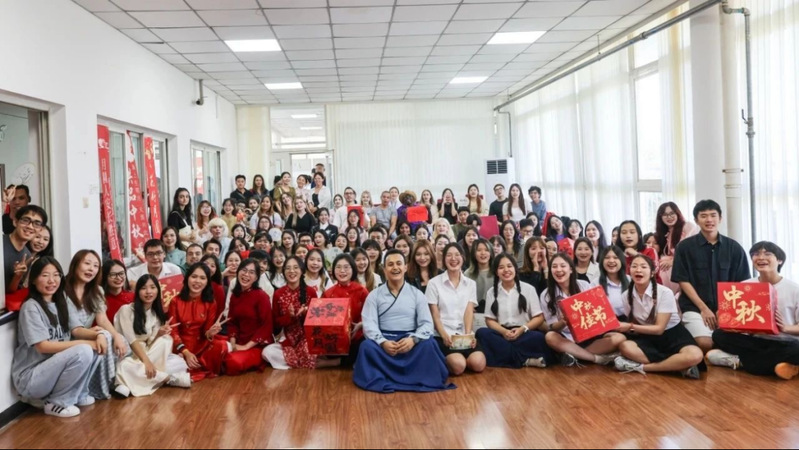
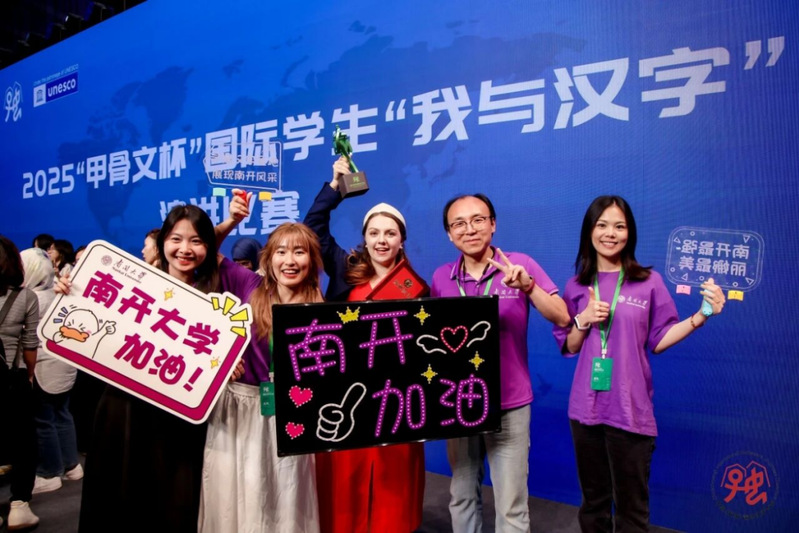
Group photo at the opening ceremony of the 12th Chinese Language Festival and Mid-Autumn Carnival at Nankai University in 2024
(Edited and translated by Nankai News Team.)

38 Tongyan Road, Jinnan District, Tianjin, P.R.China 300350 94 Weijin Road, Nankai District, Tianjin, P.R.China 300071
Copyright: Nankai University All Rights Reserved