

[Tianjin Forum 2025] Tianjin Forum 2025 Convenes in Tianjin
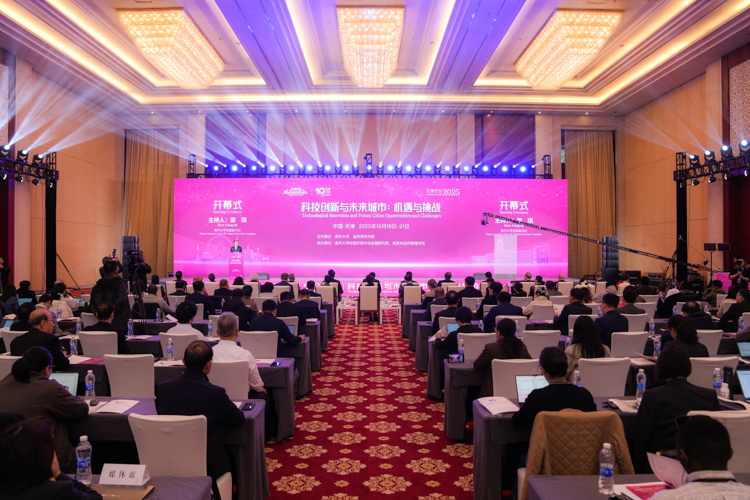
Tianjin Forum 2025, co-hosted by Nankai University (NKU) and the Chey Institute for Advanced Studies in the Republic of Korea, commenced in Tianjin on October 19. The forum was centered on the theme “Technological Innovation and Future Cities: Opportunities and Challenges.” The event brought together over 300 distinguished scholars and representatives from universities, research institutes, government agencies, and international organizations across 17 countries and regions, including the United Kingdom, the United States, Germany, Australia, and the Republic of Korea.
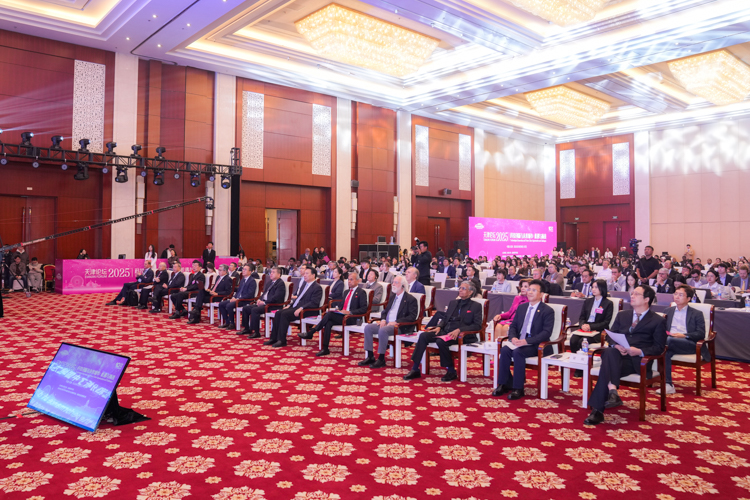
The opening ceremony featured addresses by Wang Xu, Standing Committee Member of the CPC Tianjin Municipal Committee and Executive Vice Mayor of Tianjin; Chen Yulu, President of NKU; Kim Yoosuk, President of the Chey Institute for Advanced Studies; and Siddharth Chatterjee, the United Nations Resident Coordinator in China. The invited keynote speech session was chaired by Chen Jun, Academician of the Chinese Academy of Sciences and Vice President of NKU. The opening ceremony was presided over by Liang Qi, Deputy Secretary of the CPC Nankai University Committee.
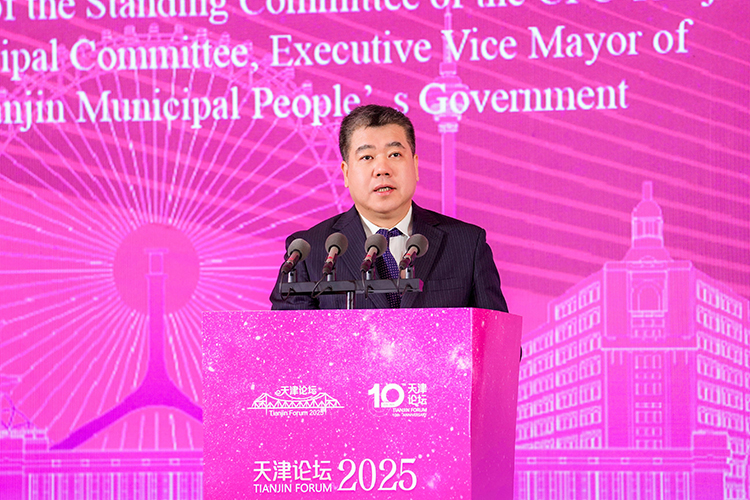
In his address, Wang Xu recognized Tianjin Forum as an academic hallmark for Tianjin’s global connectivity and outreach. The forum, aptly named after the city, serves as a platform convening global experts to address the challenges of urban development and governance and to provide intellectual support for Tianjin and cities worldwide. He noted that, at this new stage, Tianjin Forum is demonstrating a more open stance and forward-looking vision in exploring the opportunities and challenges arising from the integration of technological innovation and urban development. He emphasized that Tianjin places high importance on urban development and governance. He expressed the city’s commitment to upholding openness and innovation to advance urban modernization and contribute to the great process of Chinese modernization. In conclusion, he called on experts and scholars to join hands in pioneering new pathways and models for urban development and governance, thereby injecting fresh momentum and vitality into Tianjin’s growth and prosperity.
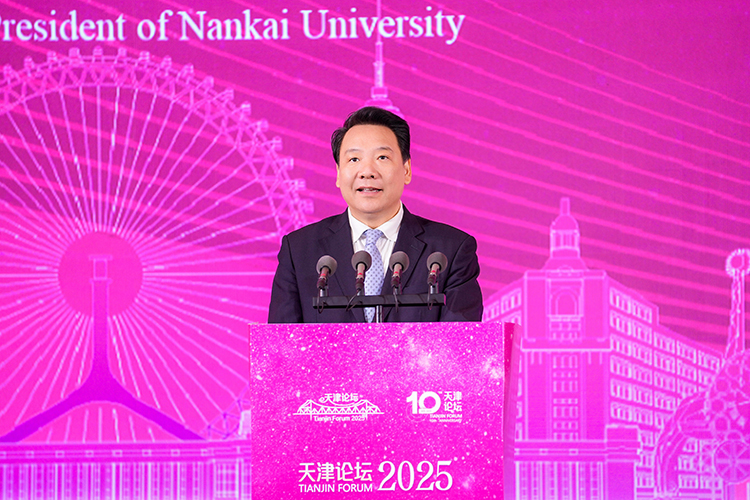
Chen Yulu noted that new-generation information technologies, represented by artificial intelligence, are creating historic opportunities while presenting new pressing challenges. The foremost among them is how to grasp the underlying dynamics of urban development in this rapidly evolving landscape. In recent years, NKU has fully leveraged its strengths as a comprehensive university to actively support urban and regional development and to provide a talent pipeline for social progress and urban modernization. This year marks the beginning of a new decade for Tianjin Forum. At this new stage, he called for a collective effort to elevate the forum to a new stage of development, build academic bonds that transcend geographical boundaries, and foster a closer-knit academic community. He hoped that this community would engage in sustained exploration of Chinese modernization and issues of common human concern, thereby injecting robust momentum into urban development in the era of the Fourth Industrial Revolution.
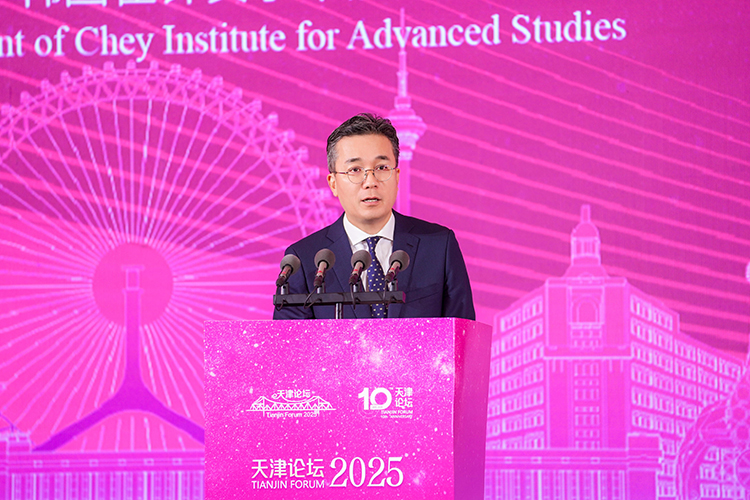
In his address, Kim Yoosuk remarked that cities are not merely physical spaces but vibrant “laboratories” where technology, governance, and society converge. To envision the future of cities is, to a large extent, to envision our shared future. Governance, by its very nature, varies across individuals, communities, and nations—which is precisely why dialogue and exchange are so important. It is dialogue and exchange that creates the necessary conditions for ideas to truly interact, collide, and evolve. He hoped that Tianjin Forum would serve as a platform to deepen mutual understanding and jointly build a cooperative framework for future cities. He looked forward to the forum contributing to the development of intelligent, inclusive, sustainable, and human-centered urban spaces while playing a more constructive role in fostering mutual trust and shared prosperity.
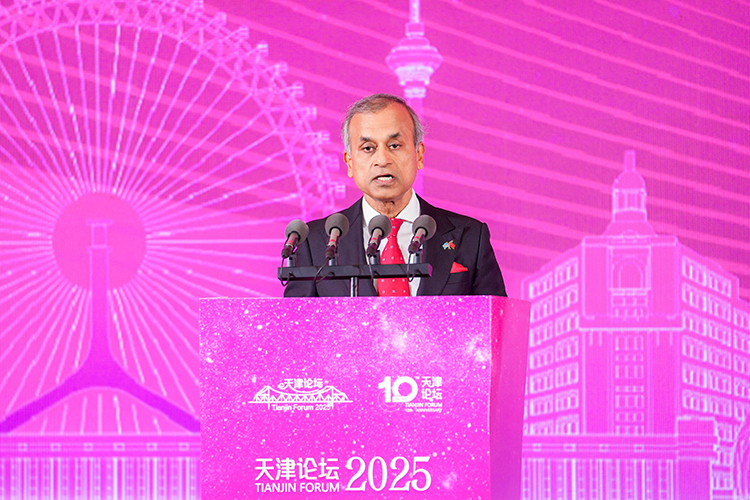
Siddharth Chatterjee stated that since its launch in 2015, Tianjin Forum has evolved into a global platform dedicated to urban governance and technological innovation. As key drivers of the world’s future development, cities require particularly thoughtful planning and construction. With only six years remaining to achieve the Sustainable Development Goals (SDGs), Tianjin—as one of China’s innovation hubs—is actively advancing technological innovation in areas such as digitalization to enhance urban efficiency and vitality. He expressed his expectation that the 2025 edition would generate significant academic insights to help navigate smart city trends and steer urban development toward a more resilient, intelligent, and sustainable future.
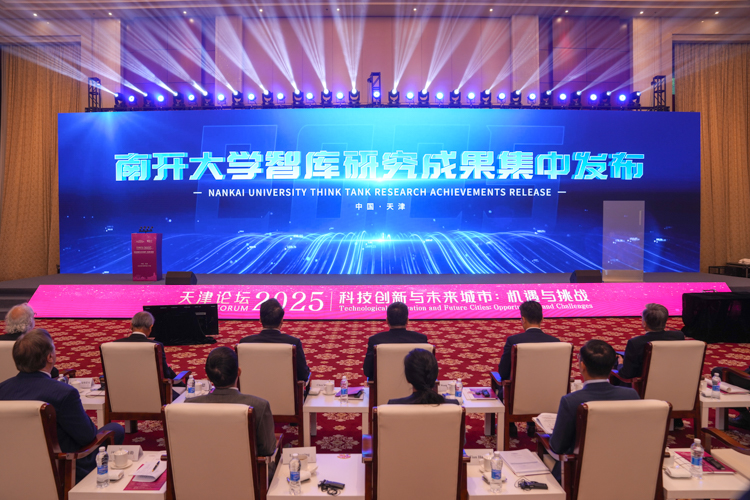
The opening ceremony witnessed the release of ten featured NKU think tank research outputs, which offered multidimensional insights into key issues of urban socio-economic development. The collection included:
Annual Report on Chinese Private Enterprise Outbound Direct Investment Index (2024)
Asia-Pacific Regional Economic Cooperation and Development Report (2024)
China Government Development Research Report 2024
China Local Government Development Capacity Report 2024
Dual Digital-Green Transformation and Sustainable Urban Development
Research Report on Inbound and Outbound Tourism Development and Cooperation Between China and Major Asian Economies
Tianjin High-Growth Enterprises 50 (2025) © Report
Selected Cases of Rural Revitalization Practices
Inclusive Development Assessment Index Framework for Smart Cities
China Monthly Grid Carbon Emission Factor Calculation Model and Database
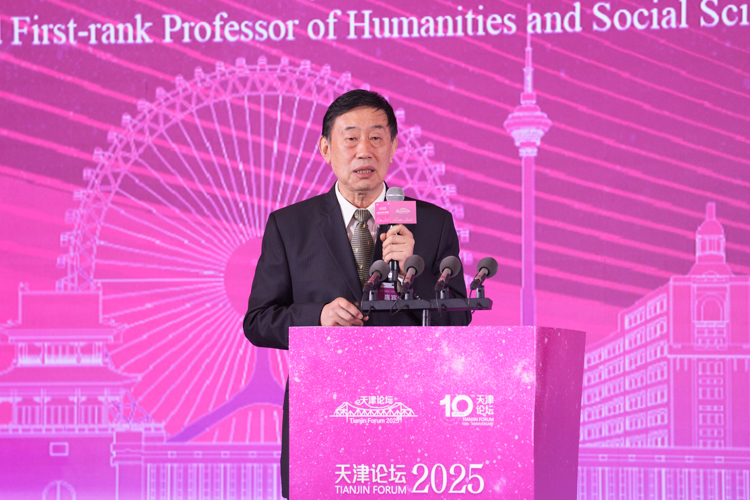
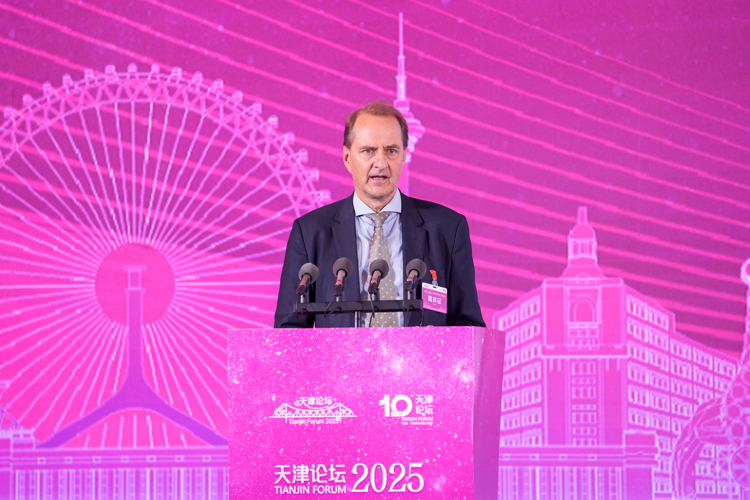
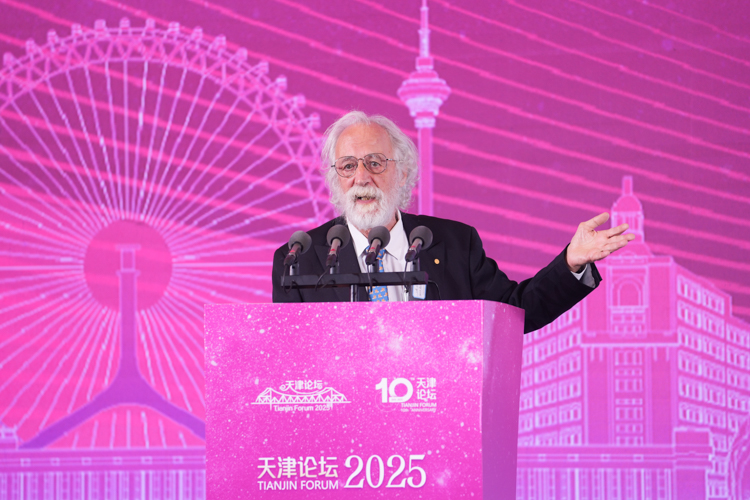
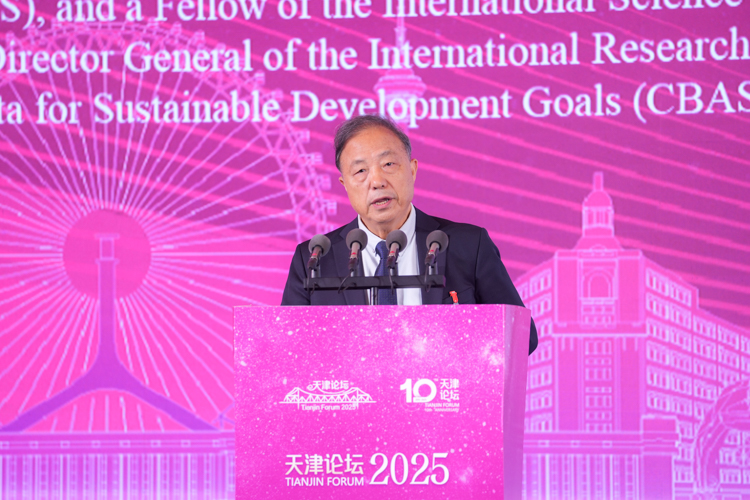
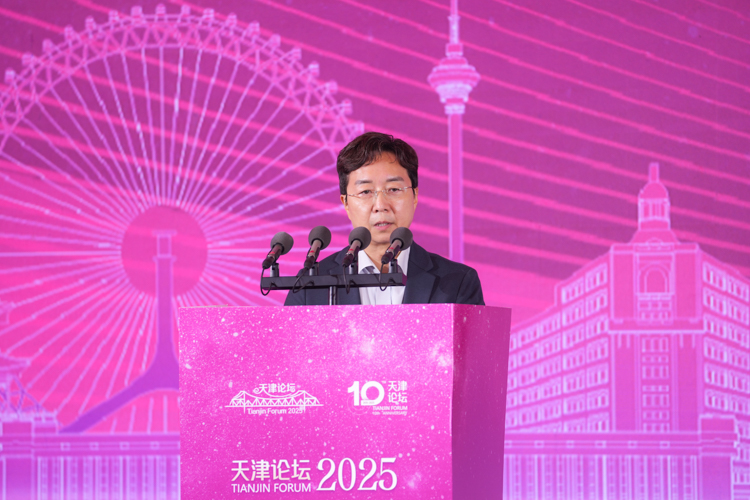
Distinguished speakers delivered presentations at the invited keynote speech session: Li Peilin, Member of the Chinese Academy of Social Sciences, Dean of the Faculty of Political Science and Law, and First-rank Professor, presented on the topic “Urban Regeneration, Inclusivity, and Megacity Governance.” Dirk Messner, President of the German Environment Agency, shared his insights on “The Integration of Digital and Sustainable Development Capacities in Cities - Potentials, Risks, and Open Questions.” Pierre Agostini, the 2023 Nobel Laureate in Physics and NKU Honorary Professor, expounded on “Attosecond Flashes of Light: Generation, Applications, and Beyond.” Guo Huadong, Academician of the Chinese Academy of Sciences and The World Academy of Sciences, Fellow of the International Science Council, and Director General of the International Research Center of Big Data for Sustainable Development Goals, elaborated on “Harnessing the Power of Digital Technologies for Urban Sustainable Development.” Hyunjoon Yoo, Member of the American Institute of Architects (AIA) and Professor of the Department of Architecture at Hongik University in the Republic of Korea, envisioned the “A Breathing Future City”.
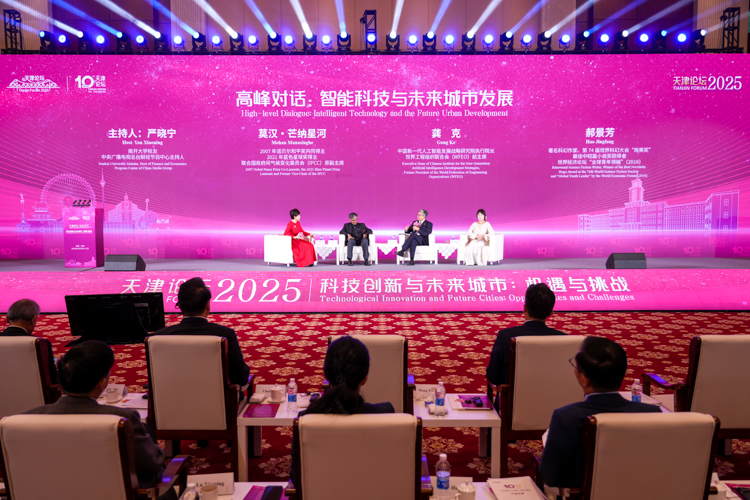
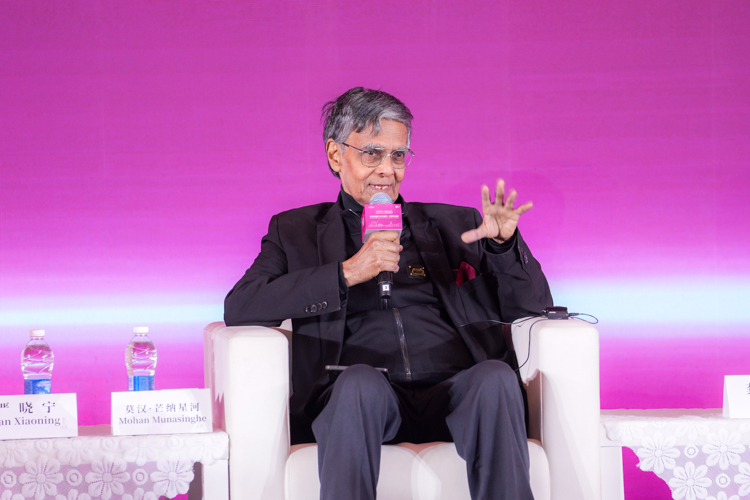
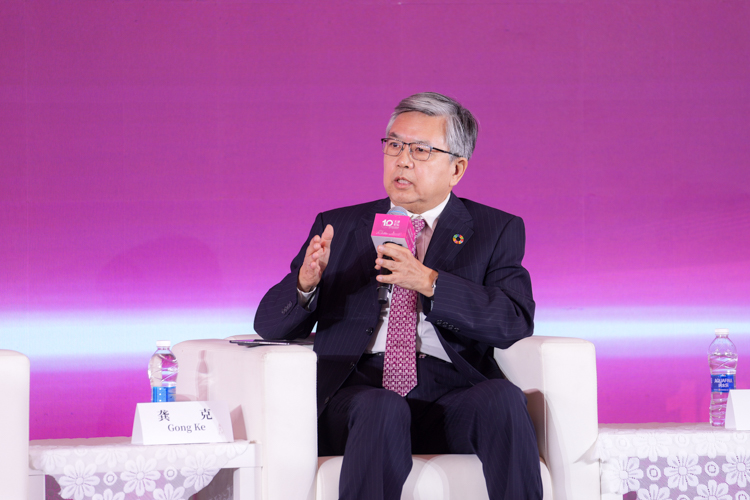
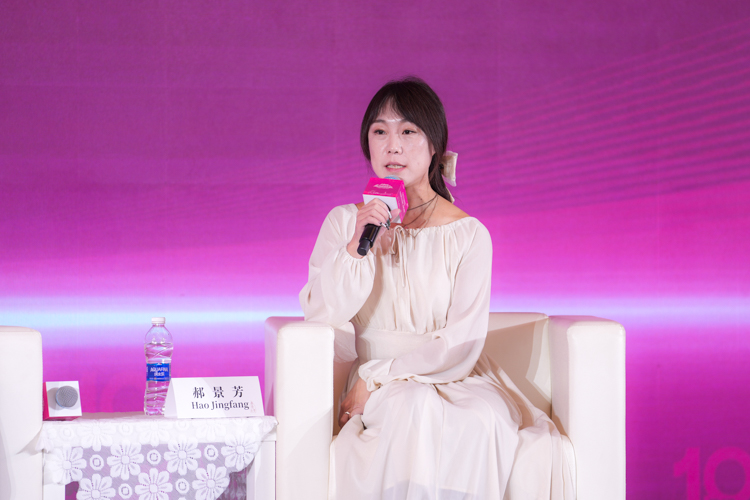
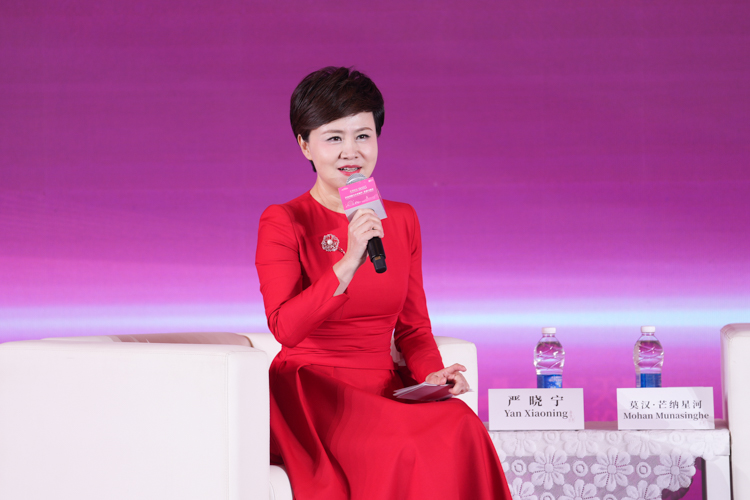
A high-level dialogue was convened to explore the theme “Intelligent Technology and the Future Urban Development.” The panel featured an esteemed group of experts: Mohan Munasinghe, co-recipient of the 2007 Nobel Peace Prize, winner of the 2021 Blue Planet Prize, and former Vice-Chair of the UN Intergovernmental Panel on Climate Change; Gong Ke, Executive President of the Chinese Institute of New Generation Artificial Intelligence Development Strategies and former President of the World Federation of Engineering Organizations; and Hao Jingfang, acclaimed science fiction writer, winner of the Hugo Award for Best Novelette at the 74th World Science Fiction Convention, and Global Youth Leader named by the World Economic Forum (2018). They delved into intelligent urban transformation and its implications for humanity’s future. The session was moderated by Yan Xiaoning, a hostess from the Financial Program Center of China Media Group and an NKU alumna.
Tianjin Forum 2025 featured 14 parallel sessions that integrated cutting-edge technology with humanistic perspectives to explore critical areas such as technological breakthroughs, social governance, and global cooperation.
During the parallel sessions, participants engaged in in-depth discussions on a range of pressing topics and academic frontiers, including: Carbon-neutral Technology Innovation, AI and Sustainable Cities, Culture and Social Development, Promoting Innovative and Sustainable Growth in the Asia-Pacific Region, Global and Regional Economic Cooperation in the Digital Intelligence Era, Carbon Footprint and Intelligent Climate-Neutral City Construction, Smart City Governance, Social Equity in Smart Cities: Building Inclusive and Shared Urban Futures in the Digital and Intelligence Era, Transformation of the International Order and High-Quality Development in Northeast Asia, Asian Inbound and Outbound Tourism & the Development of World Tourism Cities—Building Tianjin into an International Consumption Center and a World-famous Cultural Tourism Destination, Education and Youth Sustainable Development, Digital and Intelligence Empowerment Her Future: Women’s Development and Urban Innovation in East Asia’s Digital Advancement, Well-being and Creativity: Future Industry Innovation and Development, High-Quality Urban Development: Coordination, Innovation, and Sustainability.
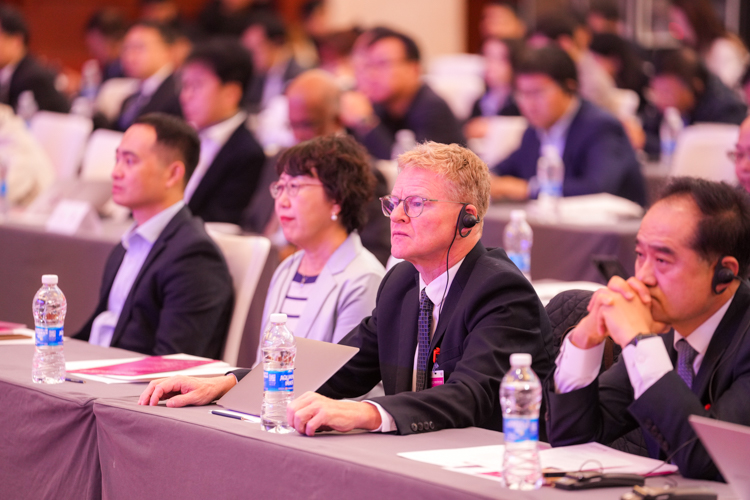
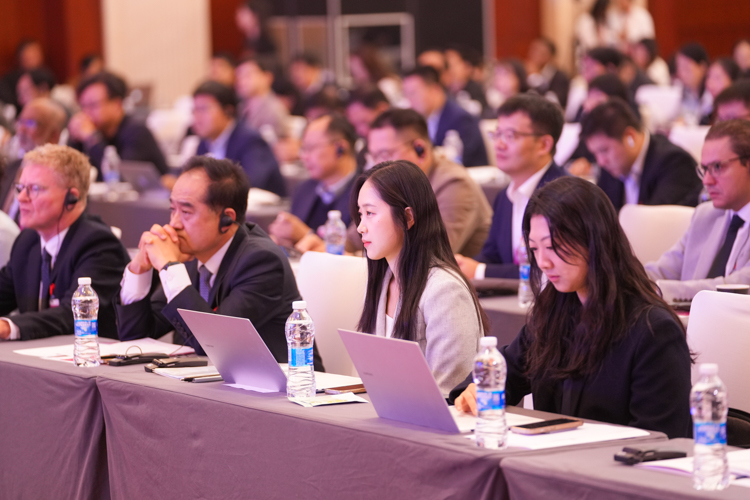
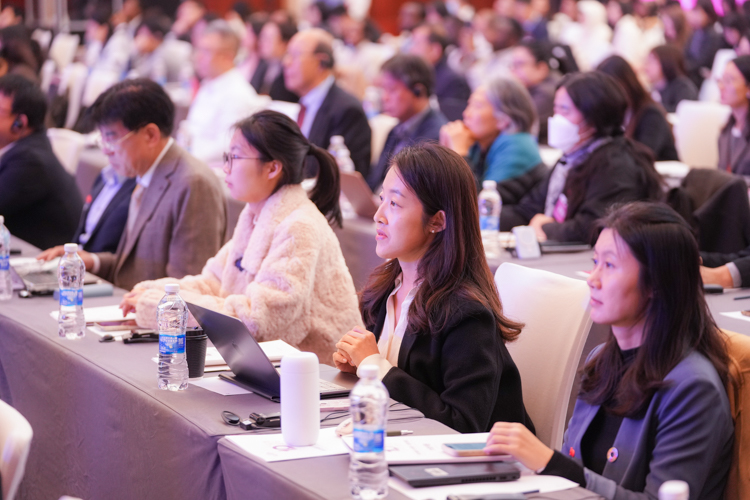
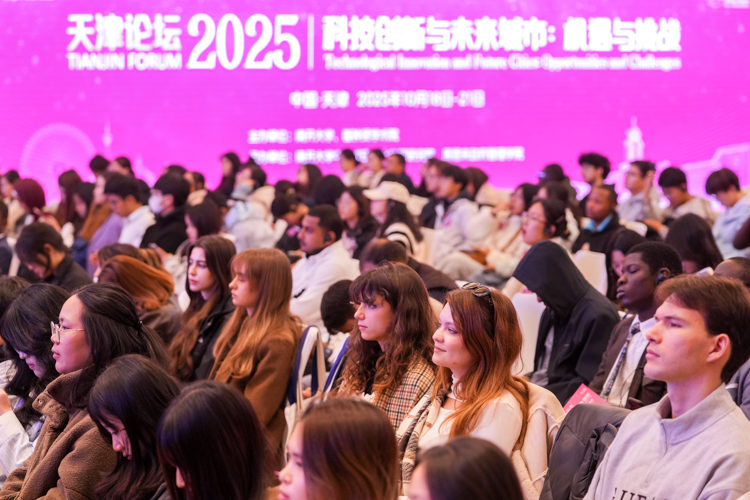
Tianjin Forum, a biennial event launched in 2015, has convened five successful sessions to date. Over the past decade, the forum has been consistently centered on the theme “Urban Development and Governance.” Leveraging Tianjin’s unique geographical advantages and development potential, along with NKU’s multidisciplinary strengths as a comprehensive and research-intensive institution and its deep collaboration with the Chey Institute for Advanced Studies, the forum has established itself as a vital platform for interdisciplinary and cross-border academic exchange and cooperation. With the ongoing participation and support of global experts and scholars, Tianjin Forum has become a key channel and recognized brand for academic exchange between China and the rest of the world.
(Edited and translated by Nankai News Team.)

38 Tongyan Road, Jinnan District, Tianjin, P.R.China 300350 94 Weijin Road, Nankai District, Tianjin, P.R.China 300071
Copyright: Nankai University All Rights Reserved