

Nankai University Team Reports Major Advances in Mid-Infrared Plasmonics
A research team led by Professor Xu Jingjun, Professor Cai Wei, and Associate Professor Luo Weiwei from the School of Physics and TEDA Institute of Applied Physics at Nankai University has achieved a series of significant advances in the regulation mechanisms and near-field optical characterization of mid-infrared plasmons. The related findings have been published in Science Advances and Nature Communications.
The mid-infrared (mid-IR) spectral region encompasses a series of key physical processes, including structural characterization of matter, molecular identification, thermal radiation control, and space communications, making it an important frequency window that bridges fundamental scientific research and practical applications. However, as the optical wavelength increases, challenges such as weakened light–matter interactions and limited spatial resolution become increasingly pronounced, constraining the further advancement of related characterization techniques and the performance of functional devices.
Polaritons are quasiparticles formed through the strong coupling between photons and matter excitations, such as collective oscillations of free electrons (plasmons) and lattice vibrations (phonon polaritons). They feature strongly confined electromagnetic fields at deeply subwavelength scales. Traditional noble-metal plasmonic systems primarily operate in the visible to near-infrared regime and have found important applications in areas such as high-density magnetic storage and surface-enhanced spectroscopy. In contrast, the exploration and development of polaritonic systems in the mid-infrared regime are expected to provide a new physical platform for enhancing mid-IR light–matter interactions and for advancing related characterization techniques and device performance.
Low-symmetry polar crystal thin films naturally support volume-confined hyperbolic phonon polaritons (v-HPhPs). These modes simultaneously exhibit highly compressible optical fields and excellent directional propagation characteristics, making them an important platform for nanoscale, directional control of light–matter interactions, and demonstrating broad application prospects in on-chip thermal transport regulation, on-chip molecular spectroscopy, and cavity quantum materials engineering. However, due to the lack of effective tuning mechanisms, the further development of v-HPhPs still faces significant challenges.
Graphene plasmons exhibit flexible electrical tunability and, through mode-coupling effects, have been recognized as an important physical mechanism for regulating hyperbolic phonon polaritons (v-HPhPs). Building on their long-term research in plasmonics [Nat. Commun. 10, 2774 (2019); Nano Lett., 21, 5151 (2021); Nat. Commun., 13, 983 (2022); Phys. Rev. Lett. 134, 043802 (2025)], the team established a theoretical model describing the ultimate tuning capability of graphene plasmons. Experimentally, this ultimate tuning capability was validated by integrating an interlayer-biased bilayer graphene structure at the v-HPhPs thin-film/air interface, where plasmonic modes arising from in-phase collective oscillations of interlayer charges were exploited to realize such extreme control. This tuning approach features a large dynamic range, independence from the dielectric environment, and low driving voltage. Based on this mechanism, the team further demonstrated flexible control of topological phase transitions in polariton iso-frequency dispersion curves. More importantly, this work enables dynamic programming of on-chip optical energy flow directions, opening new prospects for the development of mid-infrared on-chip dynamic functional devices, with promising applications in reconfigurable thermal management and ultra-sensitive biosensing.
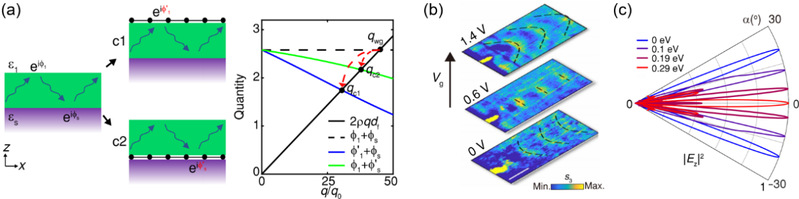
These findings were published in Science Advances under the title “Ultimate Tuning of Hyperbolic Phonon Polaritons”. Nankai University is listed as the first affiliation. Doctoral student Zhang Linglong is the first author, with Associate Professor Luo Weiwei, Professor Cai Wei, and Professor Xu Jingjun as corresponding authors.
Nickelate materials, as representative strongly correlated oxide systems, exhibit complex and rich physical behaviors due to the interplay of lattice, charge, and spin degrees of freedom. These materials can undergo first-order metal–insulator phase transitions under external stimuli such as temperature and electric fields. In collaboration with Professor Alexey B. Kuzmenko’s team at the University of Geneva, where Associate Professor Luo Weiwei previously conducted postdoctoral research, the team investigated NdNiO₃ thin films. Using mid-infrared scattering-type scanning near-field optical microscopy, they achieved nanoscale imaging of metal–insulator phase-separated boundaries and observed strongly enhanced near-field optical phase signals at the interfaces. Combined with theoretical analysis and numerical simulations, the study revealed that these experimental signals originate from edge plasmon modes formed at the metal–insulator boundaries. As the width of the phase-transition boundary decreases, the response of these modes evolves from a localized response associated with the epsilon-near-zero dielectric condition to a non-local response with quasi-one-dimensional propagation characteristics. This work elucidates the critical role of non-local responses in the near-field optical characterization of strongly correlated systems and provides an important experimental criterion for identifying and understanding metal–insulator phase transition behaviors. Moreover, the discovery of quasi-one-dimensional propagating edge plasmon modes establishes a solid physical foundation for the development of reconfigurable infrared photonic devices based on phase-transition materials.
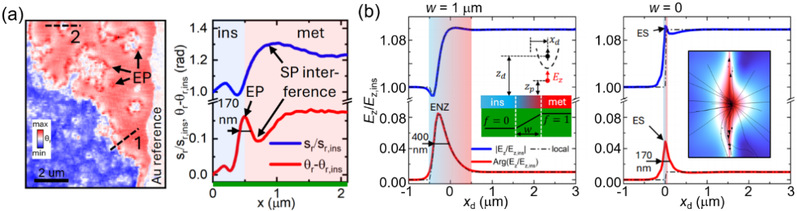
These findings were published in Nature Communications under the title “Edge Polaritons at Metal–Insulator Boundaries in a Phase Separated Correlated Oxide”. Nankai University is listed as the first affiliation. Associate Professor Luo Weiwei and Adrien Bercher, a doctoral student from University of Geneva, are co-first authors, with Professor Alexey B. Kuzmenko as the corresponding author.
Link to the paper:
https://www.nature.com/articles/s41467-025-66698-5;
https://www.science.org/doi/10.1126/sciadv.adz6278
(Edited and translated by Nankai News Team.)

38 Tongyan Road, Jinnan District, Tianjin, P.R.China 300350 94 Weijin Road, Nankai District, Tianjin, P.R.China 300071
Copyright: Nankai University All Rights Reserved