


Nankai University Team Makes Important Progress in Multidimensional Precision Diagnosis and Treatment of Atherosclerotic Plaques
A research team at Nankai University has made important progress in the study of multidimensional precision diagnosis and intervention for atherosclerotic plaques. By integrating near-infrared II fluorescence imaging, photoacoustic imaging, and magnetic resonance imaging into a single organic molecule probe, the team achieved early-stage multidimensional precision identification of atherosclerotic plaques in vivo, as well as therapeutic monitoring. The research has been published in Nature Communications.
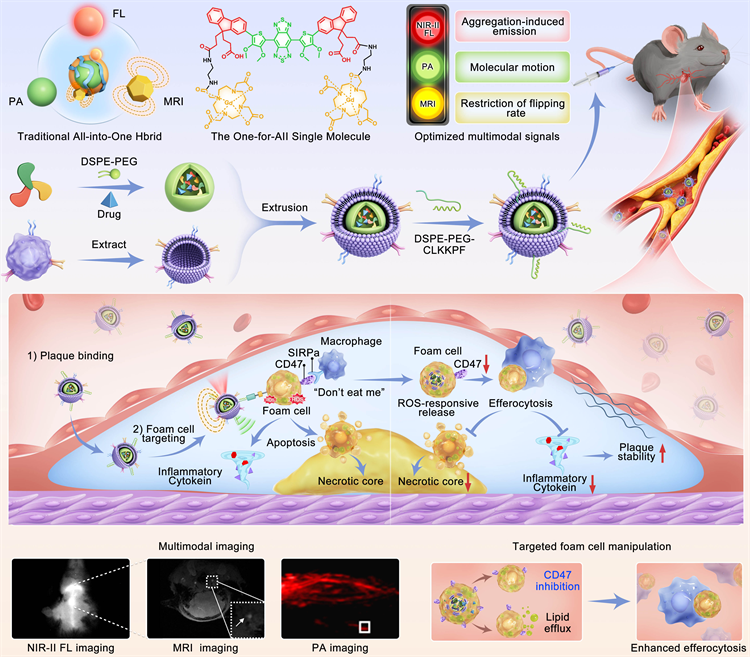
Figure 1: Schematic illustration of multimodal, cross-scale imaging diagnosis and targeted therapeutic intervention for atherosclerotic plaques
The team developed a kind of new organic molecule probe capable of simultaneously delivering high-brightness near-infrared II fluorescence imaging, photoacoustic imaging, and magnetic resonance imaging. By conjugating a Gd-DOTA ligand, the probe enhances fluorescence intensity and promotes photoacoustic conversion, while suppression of free rotation strengthens the magnetic resonance imaging signal, enabling the simultaneous enhancement of all three imaging modes. By leveraging the complementary strengths of these imaging modes, the probe can provide cross-scale information on plaque location, depth, and morphology. Building on this, the team further developed a hierarchical targeted delivery system that combines multimodal imaging with selective intervention in foam cells to improve the management of atherosclerosis. To enable targeted therapy, the molecule probe and atorvastatin were co-loaded into a responsive carrier, whose surface was camouflaged with a macrophage membrane and modified with a foam cell-targeting peptide. This hierarchical targeting strategy enables precise targeting of inflamed plaques and foam cells and allows controlled drug release, thereby promoting lipid efflux, reducing inflammatory signaling, and enhancing plaque stability in animal models of atherosclerosis. It also enables real-time in situ monitoring during treatment. This imaging-guided integrated therapeutic system offers bright prospects for the precise diagnosis and treatment of cardiovascular disease.
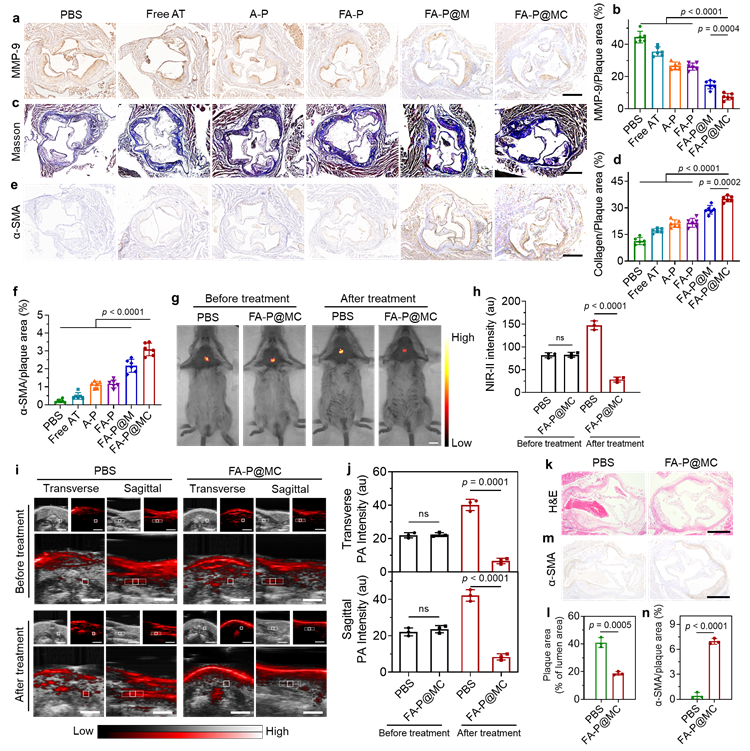
Figure 2: Study of the intervention mechanism for atherosclerotic plaques and in situ imaging monitoring
Nankai University is the first affiliated institution and corresponding institution for this work. Professor Qi Ji of the State Key Laboratory of Medicinal Chemical Biology and the College of Life Sciences, Nankai University, and Professor Li Wen at the Chinese Academy of Medical Sciences are the corresponding authors. Song Jianwen and Kang Xiaoying, both doctoral students at Nankai University, are co-first authors of the paper.
Link to the paper: https://www.nature.com/articles/s41467-026-70463-7
(Edited and translated by Nankai News Team.)

38 Tongyan Road, Jinnan District, Tianjin, P.R.China 300350 94 Weijin Road, Nankai District, Tianjin, P.R.China 300071
Copyright: Nankai University All Rights Reserved