
Nankai University–Princeton University "Chinese + Sociolinguistics" Research Project Launched
On October 19, the Nankai University–Princeton University Chinese + Sociolinguistics Research Project, organized by Nankai University's School of International Education, was launched at the university. More than 20 faculty members and students from Princeton University will embark on a cultural exchange and Chinese-language study program in Tianjin and Beijing.
The project's opening ceremony was held at Haibing Center on Balitai Campus on the morning of October 19. Chen Jun, an academician of the Chinese Academy of Sciences and Executive Vice President of Nankai University, attended the ceremony and delivered remarks.
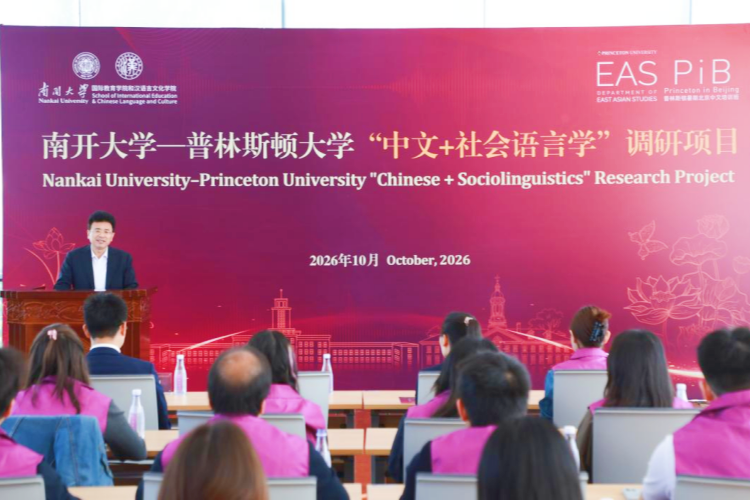
On behalf of Nankai University, Chen Jun warmly welcomed the faculty members and students from Princeton University who had traveled a long way to attend the project. He noted that President Xi Jinping attaches great importance to youth exchanges between China and the US and has announced a new initiative to invite 100,000 young Americans to China for exchanges and study over the next five years, opening new opportunities for young people in the two countries to deepen mutual understanding and friendship. Young people represents the future of China–US relations and is an important driver for promoting mutual learning among civilizations and building a community with a shared future for humanity. Nankai University and Princeton University first forged ties through Chinese-language education and have continued to deepen mutual understanding and cooperation through long-term academic exchanges and teaching practice. This Chinese + Sociolinguistics research project uses language as a bridge, providing faculty and students from both universities with an important platform to observe Chinese society and experience Chinese culture. He encouraged students to make the most of their time at Nankai University, gain first-hand insight into China through language learning and social research, and serve as young envoys of China–US people-to-people exchanges. He hoped they would help young people in the two countries understand and connect with each other and contribute to building a community with a shared future for humanity.
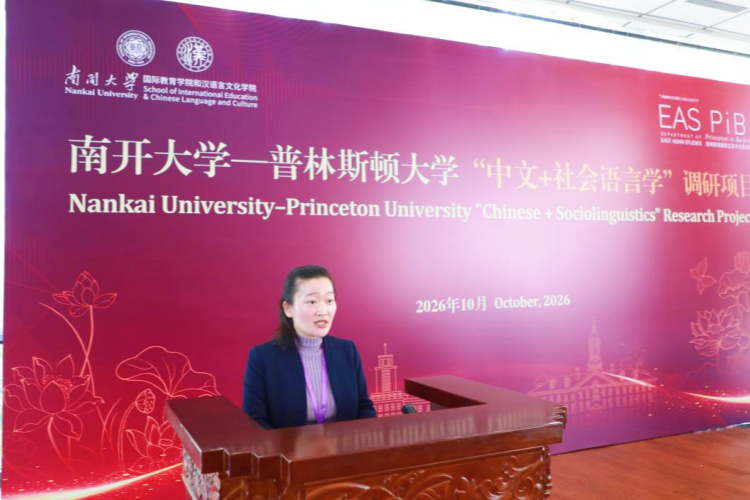
Yan Fang, an alumna of Nankai University and faculty leader of Princeton University's project team, fondly recalled her years as a student at Nankai University and expressed gratitude for the university's strong support and thoughtful arrangements for the project. She noted that mutual understanding and appreciation across cultures require face-to-face interaction and a deeper knowledge of each other's languages, cultures, and societies. The project, she noted, offers American learners of Chinese a valuable opportunity to move beyond the classroom, learn the language in real-life social settings, and gain firsthand insights into China. She drew a parallel between Nankai University's motto, Dedication to Public Interests, Acquisition of All-round Capability, and Aspiration for Progress with Each Passing Day, and Princeton University’s commitment to serving the nation and the world, while highlighting how sociolinguistics connects the study of language with everyday social life. She encouraged students to make the most of this opportunity by exploring society with questions in mind, observing language with curiosity, and approaching different cultures with an open mind. She expressed hope that exchanges among young people would foster greater mutual understanding, strengthen cooperation between the two universities, and bring new momentum to China–US people-to-people exchanges.
Student representatives from Princeton University, Bryce William Gayan and Christal Enying Chen, each shared their personal journeys of learning Chinese, expressed their love for the Chinese language and culture, and voiced their hope that language learning and cultural exchange would help strengthen mutual understanding and shared progress among young people in China and the US.
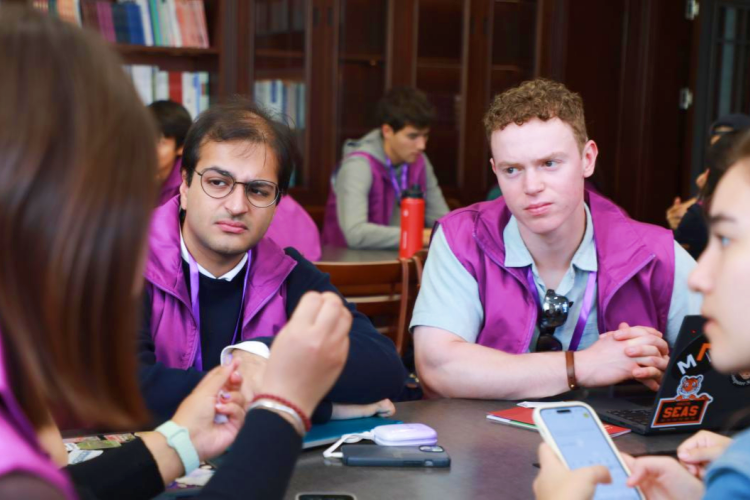
In the afternoon, faculty members and students from the two universities held discussions on topics in sociolinguistics, exchanging views based on their own language-use experiences.
The week-long research project will feature academic dialogues, panel discussions, visits and field research. Through these activities, participants will further explore the Chinese + approach and develop a study model that combines theory and practice and brings language and culture together.
(Edited and translated by Nankai News Team.)

38 Tongyan Road, Jinnan District, Tianjin, P.R.China 300350 94 Weijin Road, Nankai District, Tianjin, P.R.China 300071
Copyright: Nankai University All Rights Reserved