


2026 Tianjin Wudadao Financial Forum Held
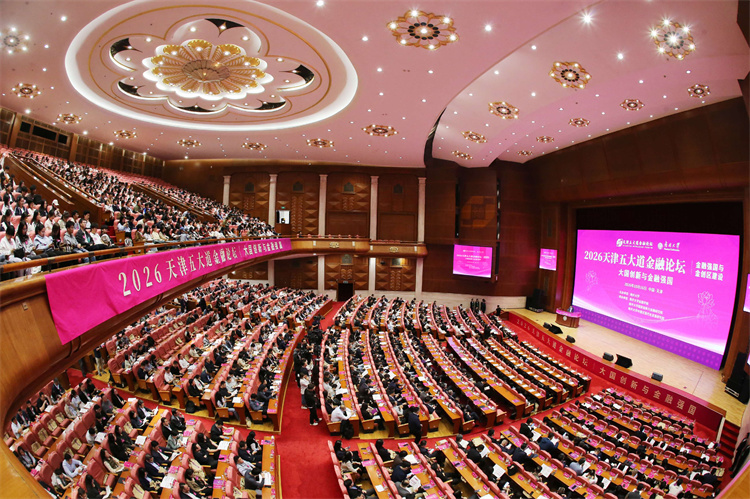
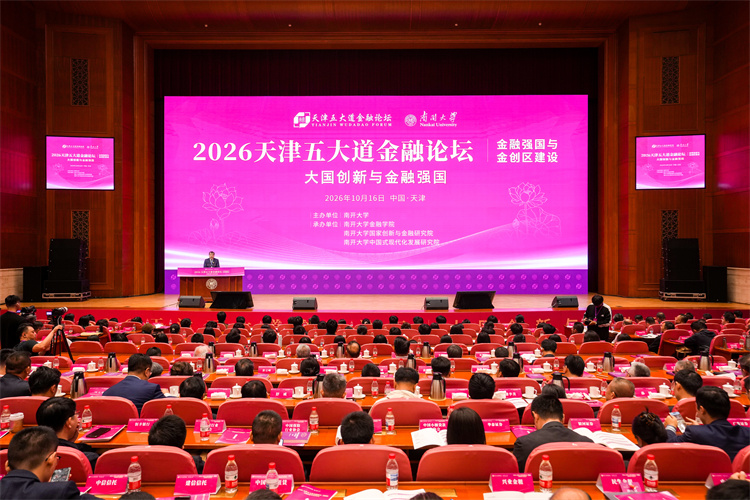
On October 16, the 2026 Tianjin Wudadao Financial Forum, hosted by Nankai University and organized by the university's School of Finance, the Institute of Innovation and Finance, and the Institute of Chinese Path to Modernization, opened at Tianjin Auditorium. With Innovation in a Major Country and Building a Financial Powerhouse as its theme, the forum brought together more than 800 representatives from relevant national ministries and commissions, national financial industry associations, major financial institutions, leading technology companies, renowned universities, and high-level think tanks.
The opening ceremony was attended by Dai Xianglong, former Governor of the People’s Bank of China, former Mayor of Tianjin, and former Chairman of the National Council for Social Security Fund; Zhu Hexin, Alternate Member of the 20th CPC Central Committee, Member of the CPC Committee of the People's Bank of China and Deputy Governor, and Secretary of the CPC Leadership Group of the State Administration of Foreign Exchange (SAFE) and Administrator of SAFE; Li Meng, Member of the 14th National Committee of the Chinese People's Political Consultative Conference (CPPCC), President of the Chinese Society for Sustainable Development, and former Vice Minister of Science and Technology; Wang Xu, Member of the Standing Committee of the CPC Tianjin Municipal Committee and Executive Vice Mayor of Tianjin; Chen Yulu, President of Nankai University; Pierre Agostini, 2023 Nobel Laureate in Physics, Foreign Academician of the Chinese Academy of Sciences, and Honorary Professor at Nankai University; and Zhang Yangguang, Director, Senior Vice President and Founding Partner of Unitree Robotics. Chen Jun, Academician of the Chinese Academy of Sciences and Executive Vice President of Nankai University, presided over the opening ceremony.
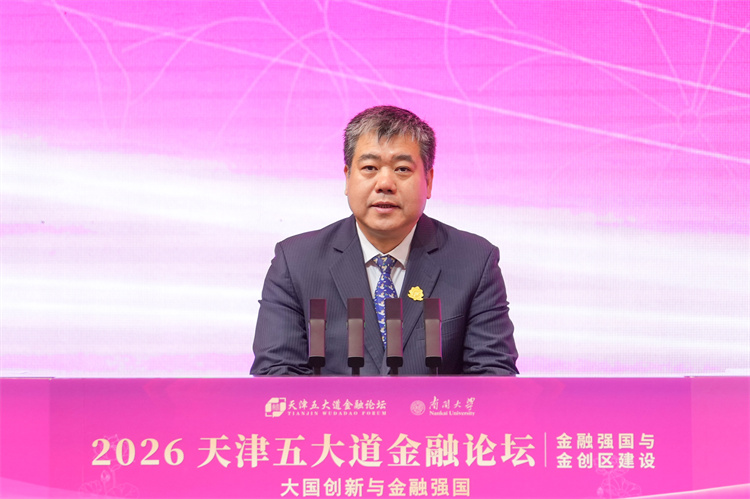
In his opening remarks, Wang Xu said that the 15th Five-Year Plan period marks a critical stage in China's efforts to become a strong financial nation and brings new opportunities for Tianjin's development. In recent years, Tianjin has built on its role as a demonstration zone for financial innovation and operation, promoting mutually reinforcing development between finance and the economy. In 2025, a number of key indicators for Tianjin's financial sector recorded growth, while instruments such as free trade accounts and the Haihe Industrial Fund continued to play an active role. Financial services now cover the entire life cycle of sci-tech and industrial innovation. Looking ahead, Tianjin will thoroughly implement General Secretary Xi Jinping's important statements on financial work and the guiding principles of his important speech during his inspection tour of Tianjin. It will pool resources and expertise to support economic development, deepen reform and innovation, and better connect financial supply with demand. High-quality financial resources will be directed toward key areas such as advanced manufacturing and modern services. Tianjin will strengthen distinctive sectors including sci-tech finance, shipping finance and financial leasing, and use platforms such as Tiankai Higher Education Innovation Park and the 117 Project to promote integration across science and technology, industry and artificial intelligence. By providing more financial support for the commercialization of scientific and technological achievements, industrial transformation and upgrading, and the development of new quality productive forces, the city will seek to develop sci-tech finance practices with distinctive Tianjin characteristics. Now in its third consecutive year, the Wudadao Financial Forum has become an important platform for analyzing economic trends, exchanging academic perspectives and deepening finance–industry collaboration. Wang Xu expressed his hope that participating experts and scholars would exchange ideas and offer recommendations to jointly advance high-quality financial development.
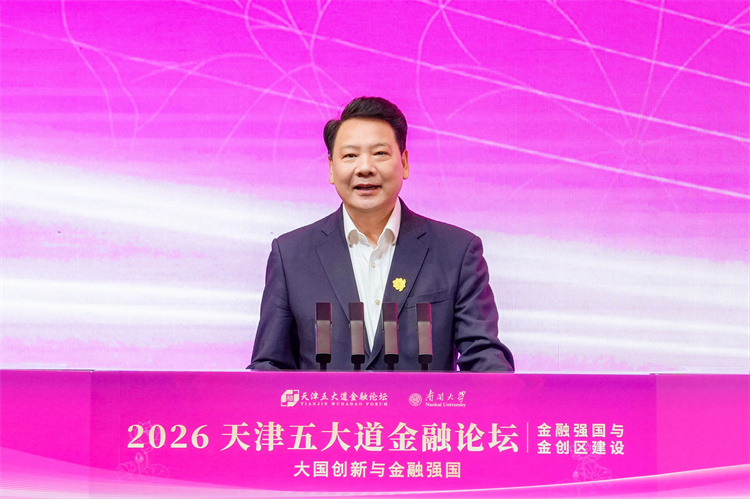
In his remarks, Chen Yulu said that building China into a strong financial nation must be rooted in the country's national strengths and cultural foundations and grounded in the great practice of the Chinese path to modernization. He called for a systematic understanding of the historical, value-based, theoretical and practical dimensions of this endeavor. China must remain committed to the fundamental direction of finance serving people's well-being, the real economy and Chinese modernization. Guided by the eight principles underpinning China's approach to financial development, China should continue to follow a path of financial development with Chinese characteristics and translate its institutional strengths into national financial capabilities in areas such as allocating resources for innovation, maintaining monetary and financial stability, managing risks and crises, and providing global financial public goods. Nankai University has carried forward its educational tradition of Knowing China and Serving China, positioned itself within the broader picture of financial reform and development, and proactively served the strategy of building China into a country with strong finance. The university has achieved historic breakthroughs in major research projects in finance, continued to produce high-level academic research and think-tank outputs, and made substantial progress in expanding its pool of high-level national talent. Nankai university is committed to strengthening its national program for excellence in financial talent training and developing an elite talent cultivation system that is interdisciplinary, practice-ready and internationally oriented. It aims to nurture outstanding innovative finance professionals with a strong sense of national responsibility, solid professional expertise and a global outlook. At the start of the 15th Five-Year Plan period, Nankai University stands ready to work with partners from all sectors, fulfill the mission of building a financial powerhouse, and contribute its strength to advancing major-country innovation and building a financial powerhouse.
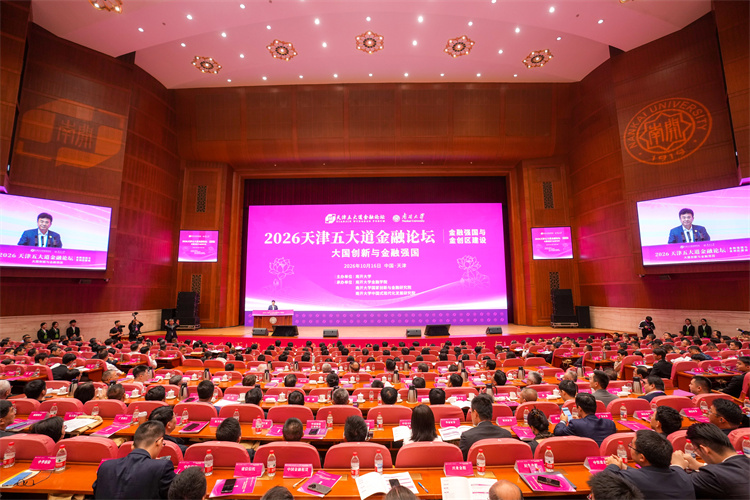
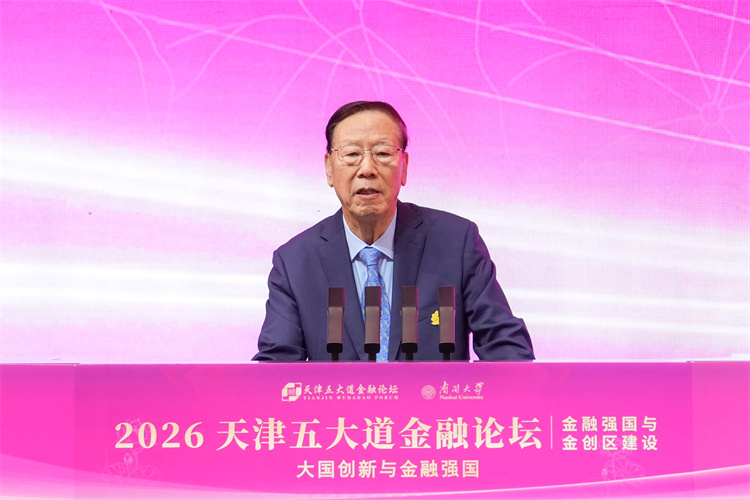
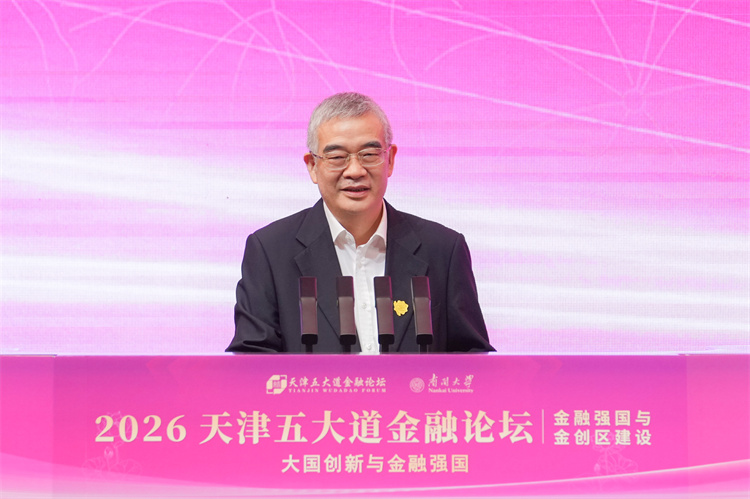
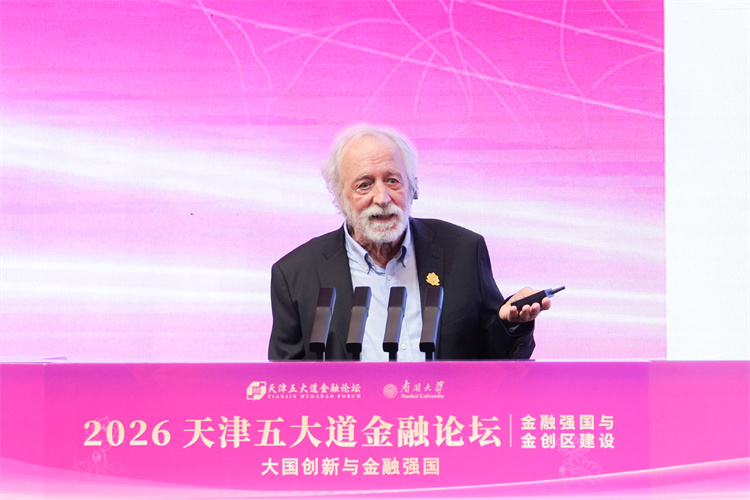
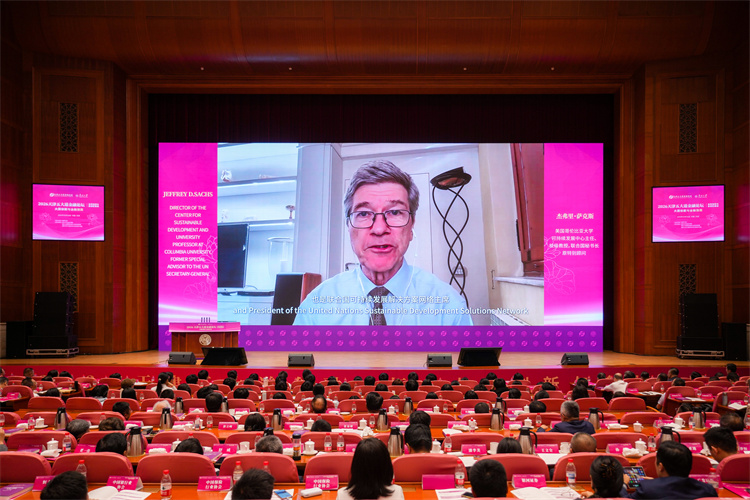
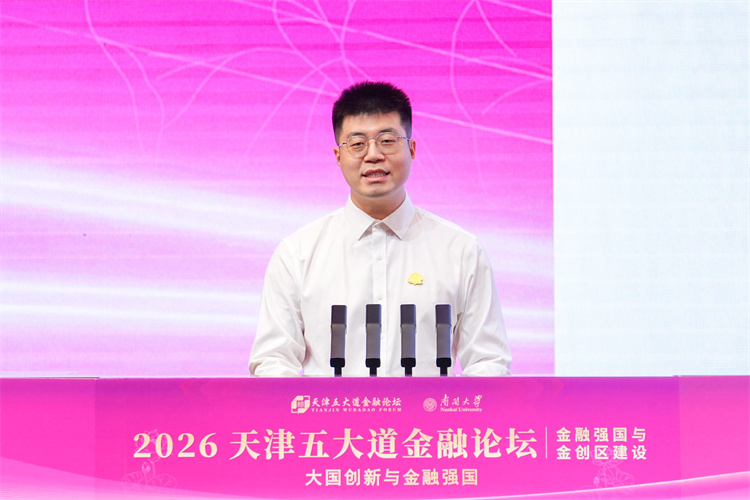
At the main forum, Dai Xianglong, Zhu Hexin, Li Meng, Pierre Agostini and Zhang Yangguang delivered keynote speeches. Jeffrey Sachs, Director of the Center for Sustainable Development at Columbia University, University Professor at Columbia University, and former Special Adviser to the UN Secretary-General, delivered a speech via video. The main forum was chaired by Chen Jun.
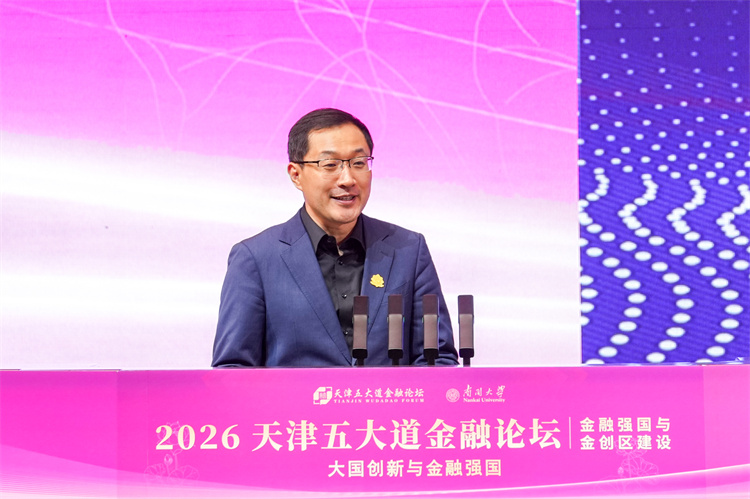
At the main forum, Nankai University and the National Supercomputer Center of Tianjin jointly launched Nantianmen: AI-Native Sci-Tech Finance System V1.0. Meng Xiangfei, Secretary of the CPC Committee and Chief Scientist of the National Supercomputer Center of Tianjin, introduced the system.
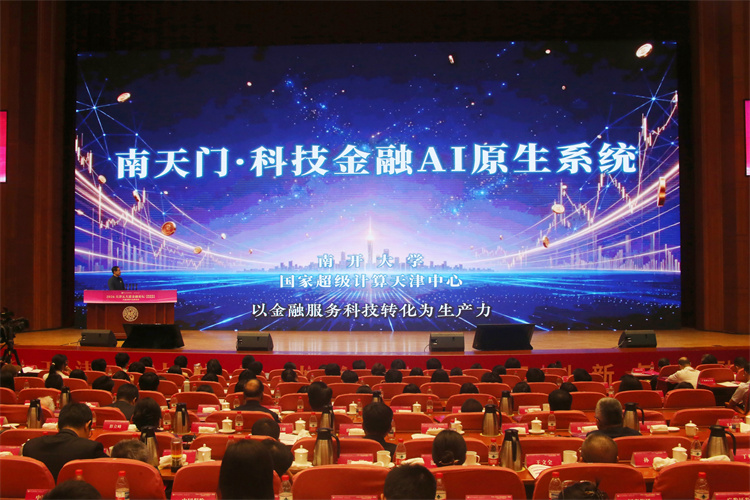
Guided by six core principles, the system is built on a six-layer architecture encompassing the Tianhe computing infrastructure, Trusted Data Spaces, a financial AI brain, sci-tech finance agents and application scenarios. By integrating publicly available internet data while enabling trusted analysis and intelligent applications without moving industry data outside their respective domains, the system addresses key challenges facing the development of sci-tech finance in data access, professional expertise, operational efficiency and standards. The system is being applied in four scenarios: valuation of technology companies, intelligent due diligence, risk tracking and monitoring, and policy compliance and financing support. It is designed to help financial institutions overcome difficulties in evaluating technology companies. A related AI consortium will be launched to support continued iteration and improvement of the system.
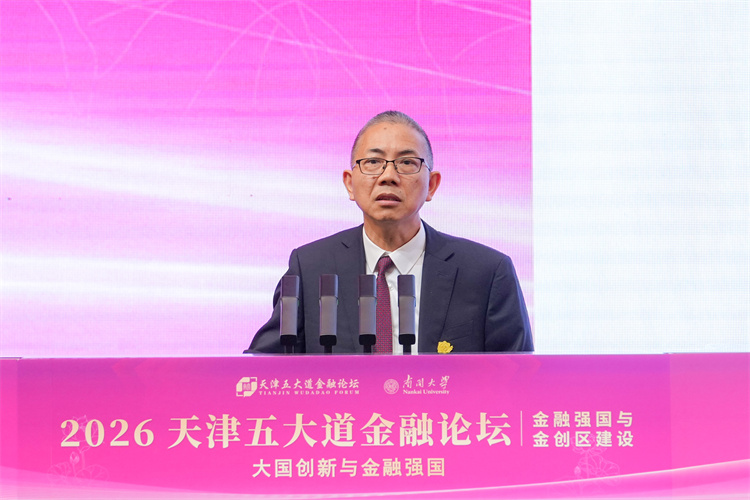
The Report on the Development of Sci-Tech Finance (2026) was also released at the main forum, providing a theoretical basis and practical guidance for building the sci-tech finance ecosystem. Peng Wensheng, Co-Dean of the Institute of Innovation and Finance at Nankai University and former Dean of the CICC Global Institute, delivered a comprehensive interpretation of the report.
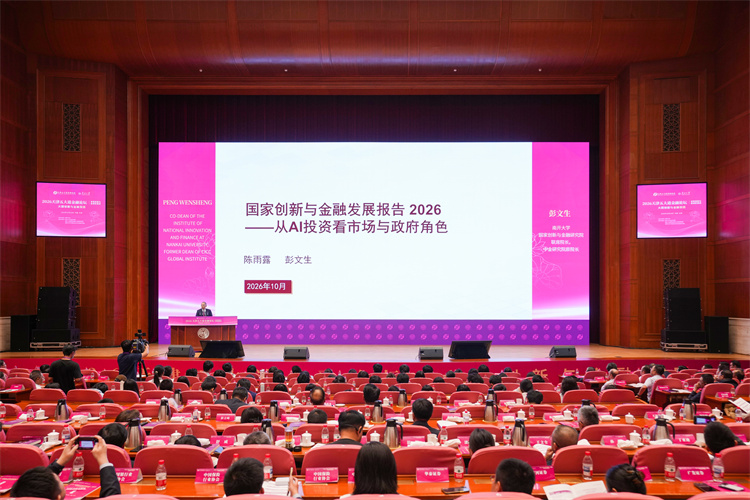
With The Government and the Market in a Major-Country Sci-Tech Finance System as its central theme, the report examines the overall assessment of China's sci-tech finance ecosystem and regional differences, the respective roles of the government and the market, and institutional design. It seeks to address three major questions: What is the current state of China's sci-tech finance ecosystem, and what structural weaknesses remain? What roles should the government and the market play in building the sci-tech finance system, and where should the boundaries of their respective roles lie? How can institutional improvements enable the strengths of the government and the market to complement each other and work in concert to build a sound sci-tech finance system? The report comprises six chapters. It begins by setting out an indicator system and analyzing the evaluation results, then explains the theoretical rationale for government and market support for scientific and technological innovation, examines challenges in key areas, and offers directions for institutional improvement and policy recommendations.
Three parallel sub-forums were held that afternoon. Focusing on how sci-tech finance can empower the high-quality development of the real economy, participating experts and scholars held in-depth discussions on topics including Innovation Engines and Financial Empowerment: Integrating Technology, Industry and Capital through Collaboration among Three Major International Innovation Centers; New Finance and New Momentum: How REITs Support the High-Quality Development of the Financial Sector; and Industry as the Foundation, Finance within the Rules: Commercial Factoring Supporting the High-Quality Development of the Financial Innovation Zone. Those three parallel sub-forums were attended by Wang Xu, Member of the Standing Committee of the CPC Tianjin Municipal Committee and Executive Vice Mayor of Tianjin; Lian Maojun, Member of the Standing Committee of the CPC Tianjin Municipal Committee and Secretary of the CPC Binhai New Area Committee; Li Wenhai, Vice Mayor of Tianjin; Chen Yulu, President of Nankai University; Niu Wenli, Deputy Secretary of the CPC Nankai University Committee; and Vice Presidents Bai Chengming and Zhu Shoufei of Nankai University, respectively.
At the first parallel sub-forum, Nankai University released the Report on Sci-Tech Finance Ecosystems in the Beijing-Tianjin-Hebei Region, the Yangtze River Delta and the Guangdong-Hong Kong-Macao Greater Bay Area. The report compares and analyzes the distinct development paths of sci-tech finance ecosystems in the three major international innovation centers, offering insights and references for coordinated regional development in sci-tech finance. Chen Yulu interpreted the report, explaining the underlying logic behind the development of sci-tech finance systems in the three innovation centers. He proposed developing, in light of local conditions, sci-tech finance systems aligned with each region's innovation strengths, industrial foundations and market maturity, avoiding homogeneous competition and leveraging regional synergies to enhance the overall effectiveness of China's national innovation system.
A number of cooperation outcomes were announced and put into effect during the forum. Nankai University, the National Supercomputer Center of Tianjin, China Bohai Bank and National Internet Finance Association of China Data Technology Co., Ltd. jointly established the Sci-Tech Finance Digital and Intelligent Innovation Consortium. Nankai University, Shanghai Pudong Development Bank Co., Ltd. and Shanghai International Trust Co., Ltd. established the Research Center for Innovation in Pension Finance. Several Nankai University-affiliated sci-tech innovation funds, including the Yunxin Haihe Fund, Matihu Lake Proof-of-Concept Fund and Xinkaihu Lake Fund, were formally launched. Nankai University, together with the Tianjin Science and Technology Innovation Development Center, PICC Property and Casualty Company Limited, China Life Property and Casualty Insurance Company Limited, Ping An Property & Casualty Insurance Company of China, Ltd., and Taiping General Insurance Co., Ltd., signed an agreement to establish a sci-tech finance laboratory for credit financing for technology companies. Tianjin Credit Information Co., Ltd., together with Nankai University, Tianjin University, the Tianjin Institute of Scientific and Technical Information, the Tianjin Public Credit Center and the Tianjin Branch of Bank of Beijing, signed an agreement to establish a sci-tech finance laboratory for technology companies profiling. The Tianjin REITs Institute and the Tianjin Hexi Sci-Tech Finance Roadshow Center were inaugurated. The Tianjin Green Finance Research Institute released the Hexi District Case Studies in Green Finance Innovation (2026), encouraging financial institutions to offer a wider range of green finance products. The Beijing-Tianjin-Hebei Commercial Factoring Industry Ecosystem Consortium was signed into being, and agreements were signed for the launch of sci-tech insurance products and the establishment of a coinsurance consortium, expanding insurance offerings across the entire innovation chain.
(Edited and translated by Nankai News Team.)

38 Tongyan Road, Jinnan District, Tianjin, P.R.China 300350 94 Weijin Road, Nankai District, Tianjin, P.R.China 300071
Copyright: Nankai University All Rights Reserved